

Summer: Discussion Post
“Things don’t change in North Dormer: people just get used to them.”

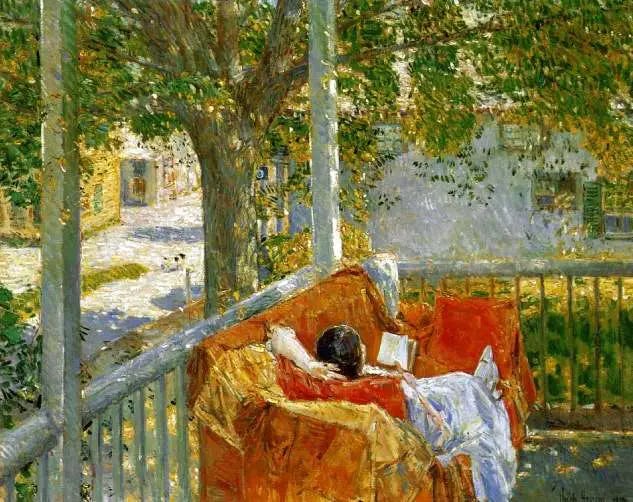
Don’t let the size of Summer fool you; Wharton packs a lot into this slim novel. According to Dr. Laura Rattray from the University of Glasgow, Wharton herself considered this one of her favorite works. She wrote the novel during the turbulent years at the start of World War I, writing it in “fits and starts.” It is one of her often overlooked works of fiction, overshadowed by her more critically acclaimed novel, Ethan Frome, which is also set in the Berkshires. But there is just as much drama and emotion to be found in Summer.
Wharton doesn’t shy away from taboo; instead, she forces the reader to confront the challenges and terrors women faced at the turn of the twentieth century. From extramarital affairs to abortion and even pseudo-incest, Wharton delivers a powerful and, dare I say, moving feminist narrative.
Let’s review the main plot points before exploring the text further.
Summary:
Summer begins on a beautiful June afternoon in the small New England town of North Dormer. A young woman runs out of Lawyer Royall’s house as a light breeze blows the straw hat off a stranger dressed in city clothes approaching her neighbor, Miss Hatchard’s home. The young woman watches him chase after his hat. This is when our heroine, Charity Royall, first spots the handsome young Lucius Harney. She feels an immediate attraction, but she doubts this young man would find her attractive since she’s not conventionally attractive like blue-eyed Annabel Balch.
Charity continues on her way to work as the librarian of the North Dormer library. But Charity is no bookworm, and neither are the townsfolk of North Dormer. The books are dusty and falling apart. The young people of the town are more likely to use the library for a secret lover’s tryst than to check out a good book. Charity insists on being the librarian so she can earn a little money of her own. She’s not interested in the actual work of maintaining the books or becoming good at her job.
It’s here, among the dusty shelves, that our lovers officially meet. Charity is busy crocheting a lace collar when the handsome stranger asks her if they have a card catalog. Charity has no idea what a card catalog is, which Lucius says is a good thing “because it’s so much pleasanter, in a small library like this, to poke about by one’s self—with the help of the librarian.” Charity learns that he’s the cousin of Miss Hatchard (who also happens to own the library), and he’s an architect visiting North Dormer to study the old homes.
As Charity makes her way to the library, we learn a bit about her history. Charity was born to a woman who lives on the mountain overlooking North Dormer. The people on the mountain are lawless heathens. She was brought to North Dormer as a child by Lawyer Royall, one of the most important men in town. She’s constantly reminded that “she had been brought down from the mountain and should hold her tongue and be thankful that she was saved from that horrific life.” Despite spending most of her life in North Dormer, Charity is different from the other young ladies in the town.
After Harney leaves, Charity often decides to close the library early to spend time outdoors.
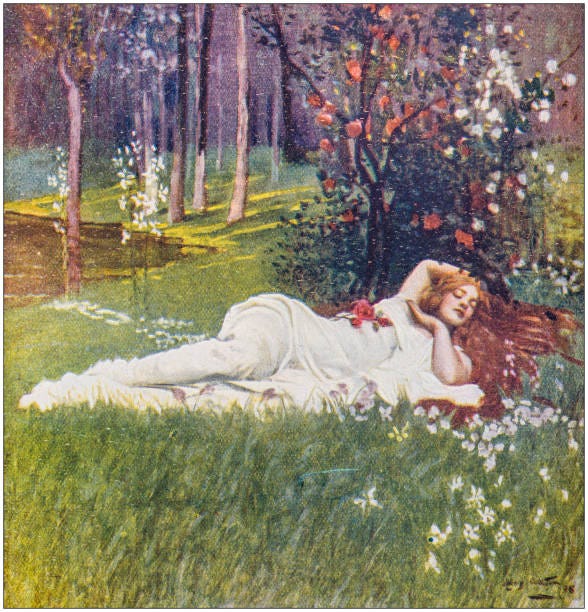
“She often climbed up the hill and lay there alone for the mere pleasure of feeling the wind and of rubbing her cheeks in the grass. Generally at such times she did not think of anything, but lay immersed in an inarticulate well-being. To-day the sense of well-being was intensified by the joy of escaping from the library.”
Her head is full of thoughts about the handsome Harney and her life with Lawyer Royall.
Lawyer Royall may have saved her from a harsh life in the mountains, but he’s no saint. Charity wants to escape North Dormer, but her only chance to date—going to boarding school—is thwarted by Royall. When she turns seventeen, he returns home from working on a case in the nearby town of Nettleton. He’s a bit drunk and tries to enter her locked room, begging her to let him in because he’s “lonesome”. After this incident, Charity refuses to be alone in the house with Royall and insists that he hire a housekeeper (which he does), and he helps her get her job at the library.
Charity and Harney continue to meet, and eventually she begins driving him around town in Mr. Royall’s buggy. Their time together remains quite innocent. Up until now, she had always avoided all the “village love-making,” but Harney is different from the men of North Dormer.
“She had learned what she was worth when Lucius Harney, looking at her for the first time, had lost the thread of her speech, and leaned reddening on the edge of the desk.”
He’s cultured and educated, and despite their intellectual and social differences, Harney and Charity have an undeniable physical attraction to each other. But Charity isn’t ignorant of the dangers of “love-making” with a man like Harney.
“But everybody knew that ‘going with a city fellow’ was a different and less straightforward affair: almost every village could show a victim of the perilous venture.”
In North Dormer, that victim is Julia Hawes. Julia got pregnant by a young man, had an abortion in Nettleton, and turned to prostitution to survive. The specter of Julia Hawes is never far from Charity as she continues her summer romance with Lucius Harney.
The two spend so much time together that Harney begins to eat his meals at the Royalls’ house when his cousin, Miss Hatchard, is called away from town. One night, the two men start talking about the people living in the mountain, and Royall shares the full story of how he came to adopt Charity (she had told him before that she was from the mountain, but hadn’t gone into details). Royall explains that he was the prosecutor who put Charity’s birth father in prison. Her father had asked Royall to bring his daughter down from the mountain and raise her as a Christian. Mr. Royall agreed, and Charity’s mother was more than happy to give her up. Charity feels mortified that Royall is telling this story to Harney.
The two spend a lot of time together, but Charity is unsure of Harney’s feelings for her. She’s very aware of their differences, yet they seem physically drawn to each other. Their interactions remain chaste despite their obvious attraction. Mr. Royall catches on to what’s happening between them, and soon, Harney stops joining them for dinner. His absence makes her anxious—so much so that she sneaks out of the house in the middle of the night to watch Harney through his window. She finds him agitated, and he appears to be packing to leave North Dormer. Charity longs to make her presence known to Harney and convince him to stay (and maybe give in to the more amorous feelings he’s awakened in her), but she restrains herself.
Unfortunately, someone sees Charity returning home late that night, adding fuel to the rumors already circulating about her relationship with Harney. Mr. Royall confronts her about her late-night escapes, and Charity blames him for sending Harney away. They fight. Charity stresses that things between her and Harney aren’t as everyone assumes, and, more than that, she doesn’t care what people in town say about her. Mr. Royall makes it clear that if Harney had honorable intentions, he would be treating her differently. He then begs her once again to marry him. When she rejects him, he storms out. Charity is about to run into the hills for comfort when Harney arrives to say goodbye. But the young lovers (?) can’t part. Harney tells her where he’s staying and begs her to meet him there that evening.
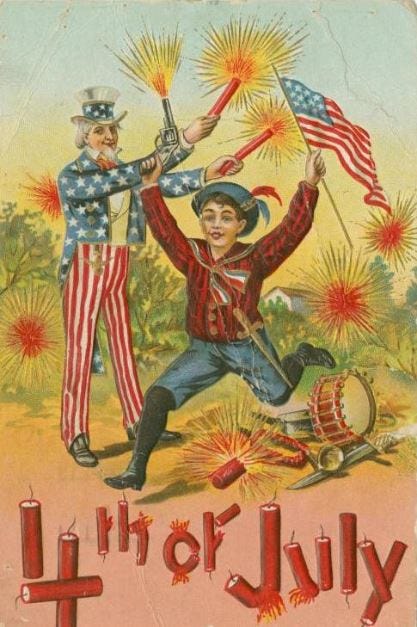
Harney may have left North Dormer, but he’s still in the area, continuing his sketches of the houses nearby, and Charity keeps joining him on his excursions. This remains a secret between them until their trip to Nettleton for the Fourth of July. They spend a lively day together, dining at a French bistro, watching a moving picture, and heading to the lake to see the fireworks. It’s here that they finally share a kiss. But the day is spoiled when they run into a drunken Mr. Royall as they try to catch the last trolley home. He’s in the company of loose women, including the infamous Julia Hawes, and calls her a whore in front of everyone. Harney comforts her as they take the last steamboat back to town.
Devastated by the events that occurred on the Fourth of July and with growing hatred for Mr. Royall, Charity packs her bags and leaves. Her plan is to go to the mountain and be with her mother’s people, but she doesn’t quite make it. Harney finds her and eventually brings her back home.
Meanwhile, Mr. Royall doesn’t return from Nettleton for three days. When he does return, Charity is no longer speaking with him. She spends the days leading up to the town’s “Old Home Week” riding her rented bicycle to meet Harney at an abandoned house in the woods where Harney has taken up residence. This becomes their love nest—a place where they can give in to their baser needs without the eyes of the town on them.
Soon, the Old Home Week festivities are in full swing. Charity, along with the other girls from North Dormer, performs for the town. Mr. Royall gives a rousing speech, during which Charity faints. But this fainting spell can’t keep her from the dance later that evening. She’s overjoyed dancing with Harney and feels jealous when he dances with the other ladies, especially Annabel Balch.
The festivities last several days, preventing Charity and Harney from having any private moments together in their abandoned house in the woods. When they finally get a chance to meet, Charity rushes off to wait for him. To her surprise, Mr. Royall arrives at the house to confront the lovers. When Harney shows up, Mr. Royall asks him if he plans to marry Charity.
“And you know why you ain’t asked her to marry you, and why you don’t mean to. It’s because you hadn’t needed to; nor any other man either.”
When Mr. Royall finally leaves, Harney attempts to console Charity and ease her worries about marriage:
“I shall have to go off for a while—a month or two, perhaps—to arrange some things; and then I’ll come back … and we’ll get married.”
But Charity never wanted to marry Harney by forcing his hand. When Harney leaves town, promising to write and swearing he will return for her, Charity is heartbroken.
“She couldn’t forget that he had never spoken to her of marriage till Mr. Royall had forced the word from his lips; though she had not had the strength to shake off the spell that bound her to him, she had lost all spontaneity of feeling, and seemed to herself to be passively awaiting a fate she could not avert.”
That fate presents itself when her friend Ally innocently informs her that Harney is engaged to Annabel Balch (and he had been for some time).
At first, Charity is furious—so furious that she tears up the blouse Ally is sewing for Annabel (a great allusion to Mrs. Rochester tearing up Jane’s wedding veil). As the days go by, Charity struggles to find the words to write to Harney, but cannot. Over time, her jealousy diminishes. “She was still sure that Harney would come back, and she was equally sure that, for the moment at least, it was she whom he loved and not Miss Balch,” yet Charity recognizes that Annabel is the type of girl Harney should marry. “Charity had never been able to picture herself as his wife...but she could perfectly imagine Annabel Balch in that relation to him.”
When Charity finally does find the words (and the courage to write to Harney she writes to release him from his commitment to her:
“I want you should marry Annabel Balch if you promised to. I think maybe you were afraid I’d feel too bad about it. I feel I’d rather you acted right. Your loving Charity.”
But our story does not end here. One day later, Charity is struck with waves of dizziness and nausea, even though five minutes earlier she felt perfectly well. It dawns on her that she might be pregnant. Two days pass before she can make her way to Nettleton to see the same doctor who performed Julia Hawes’s abortion. But after her consultation, Charity realizes she can’t go through with it. Unfortunately, she also can’t afford the consult fee — “it had never occurred to her that medical advice could cost more than two dollars.” Reluctantly, Charity pledges her own gift from Harney, as collateral, a brooch with a blue stone he bought her on their trip to Nettleton.
She arrives home to find a letter from Harney thanking her for her generosity, which has made this all easier. “Your telling me that you want me to do right has helped me beyond expression.” She’s eased his conscience, but now hers is overwhelmed. Charity contemplates her options, wondering, “…was there no alternative but Julia’s?” Relying on Mr. Royall is out of the question, and so is attempting to win Harney back. The only option she has is to return to the mountain.
“She herself had been born as her own baby was going to be born; and whatever her mother’s subsequent life had been, she could hardly help remembering the past, and receiving a daughter who was facing the trouble she had known.”
But once she reaches the clearing where her mother and her people live, Charity finds only grief, desolation, and hardship. Her mother dies just before she arrives. The weather is brutally cold, and the people are ragged and unwelcoming. Charity might have been born among these people, but she’s no longer one of them. She had always thought of her mother “as destitute of all human feeling; now she seems merely pitiful. What mother would not want to save her child from such a life?” She realizes she can’t bring her own child into the life she escaped. “Anything, anything was better than to add another life to the nest of misery on the Mountain...” And she decides to head back to North Dormer.
On her journey back down, she runs into Mr. Royall, who had come up in search of her. As they make the long trek home, he asks her again to marry him, saying they can continue straight on to Creston, catch the train, and head to the minister’s house. “She felt her resistance melting, her strength slipping away from her as she spoke”. And Charity finally gives in and agrees to marry Mr. Royall.
Dazed and confused, Charity stumbles through her wedding vows. She’s done the right thing to protect her baby, but she’s surrendered to Mr. Royall. She fears what will happen on her wedding night and is shocked to find he leaves her alone. Instead, he spends the night asleep in a chair.
“He knew, then … he knew … he had married her because he knew that, and it was because he knew that he sat there in the darkness to show her she was safe with him.”
He knows she’s pregnant and seems to be protecting her, but how long will she remain unmolested by him?
Final Thoughts:
Charity and Harney:
Harney and Charity’s relationship begins quite sweetly. He seems to respect her; however, when Mr. Royall degrades her by calling her a whore in public, things between them start to change. Grafton (1995) compares their relationship to Freud’s 1912 essay, The Most Prevalent Form of Degradation in Erotic Life. In this essay, Freud argues that men must degrade a woman to see her as a sexual being. “Where such men love, they have no desire, and where they desire, they cannot love.” While I usually take Freud’s theories with a grain of salt, I do agree with Grafton’s assessment of Harney and Charity’s relationship. We quickly move from a chaste kiss during the Fourth of July celebrations to lovers creating a secret hideaway in the woods. If there was ever a moment when Harney saw Charity as someone he could marry, that moment is gone. Once she becomes a sexual being, she stops being seen as suitable for marriage.
In contrast, Annabel is the pure and chaste counterpart to the more wild and sexual Charity. Harney doesn’t seem to view his fiancée as a sexual being. Annabel’s purity is what makes her an ideal wife. I can’t help but compare Annabel and Charity to Anna and Sophy from The Reef. “Pure” women like Annabel and Anna are kept in the dark and don’t understand sex. However, the more naturalistic women like Charity and Sophy can be objects of desire but aren’t placed on a pedestal like their virtuous counterparts. The message to women seems to be: it’s not safe for you to have sexual desires. Men can give in to their sexual urges, and there are lesser women available to act out those desires, but they can never be seen as wife material.
According to Makowsky and Bloom (2000), Harney sees Charity “as an isolated exceptional objet d’art, not a vital person embedded in a complex society of her own.” As a man, Harney has the freedom to have a summer fling with any woman he chooses. He’s only a temporary visitor to North Dormer, which frees him from the “bounds of morality” of his class (Makowsky and Bloom 2000). He can take advantage of a loophole created by society’s double standards. Harney is a transient figure without responsibility for his actions. Unfortunately, Charity must shoulder the consequences of this fling on her own and risks becoming just like Julia Hawes.
Charity and Harney have strong sexual chemistry, but intellectually, they are not equals. Each finds the other intriguing. For Harney, Charity is different from the women he encounters in New York society. She has an independent spirit, comes from the wilderness of the Mountain folk, and is unrefined. Harney is equally exotic to Charity. He’s a worldly man who might save her from rotting away in the small town of North Dormer. He speaks French, understands art, and is cultured and sophisticated in ways Charity has only dreamed of. But from the beginning, she knows that any relationship between them would be doomed. They’re simply too different.
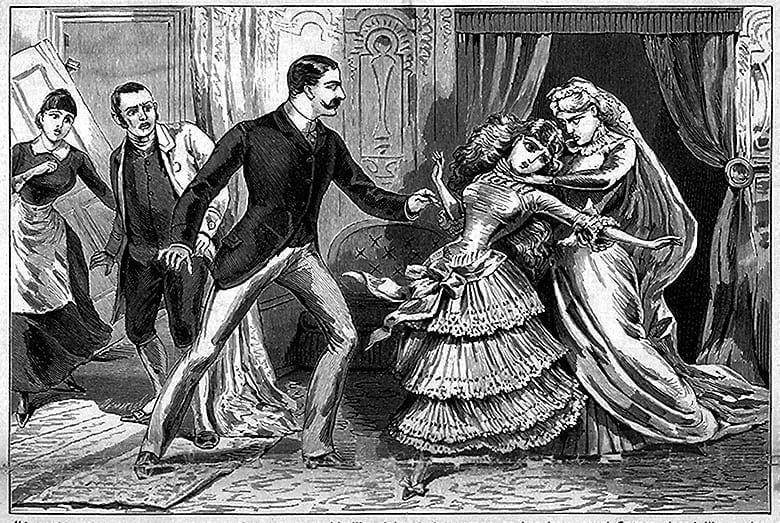
Charity and Lawyer Royall: aka The Female Gothic:
I wonder what you all thought of Lawyer Royall. At the start of the novel, it’s clear that Charity doesn’t love him like a father. There’s a distance between them. Eventually, we learn that Royall tried to force his way into her rooms while drunk, and we are led to believe he was attempting to violate her. He often asks Charity to marry him, which is incredibly uncomfortable to read since he’s essentially her father (even if he never officially adopted Charity). And yet, he’s well respected in town, he does a kind thing when he brings Charity down from the mountain and raises her in his own home, and one could argue that he does Charity the greatest kindness when he marries her to protect her from becoming like Julia Hawes.
This is where Wharton does something truly bold (in my opinion): she creates an unapologetically sexual woman (Charity) who takes the consequences of her actions in stride. She attempts to get an abortion, which is no small task for a woman like Charity to undertake on her own. When this fails, she considers telling Harney, but she recognizes that trapping him with a baby won’t lead to happiness for either of them. Ultimately, she makes the difficult decision to marry Mr. Royall for protection. Mr. Royall seems to be a good husband, at least initially, and he appears to be trying to make amends for the pain he’s caused her over the years.
Charity’s relationship with Mr. Royall feels like a Female Gothic tale. Wikipedia describes these narratives as:
“Female Gothic narratives focus on such topics as a persecuted heroine fleeing from a villainous father and searching for an absent mother. Women’s fears of entrapment in the domestic, their bodies, marriage, childbirth, or domestic abuse commonly appear in the genre. The natural cause of terror is not the supernatural, but female disability and societal horrors: rape, incest, and the threatening control of a male antagonist.”
Mr. Royall fits the role of the male antagonist who uses privileges afforded to him by his sex and standing in the community to take advantage of Charity. Her desire to be free and have some level of agency over her own life is thwarted by the lack of opportunities for women to be independent in this society. When a woman tries to live on her own terms, she ends up like Julia Hawes—ostracized and a prostitute. As her guardian and father, Mr. Royall has complete control over Charity, and once he makes her his wife, he gains even more dominion over her. Charity is “persecuted” by Royall throughout the novel as he keeps insisting that she marry him. By playing with the Female Gothic, Wharton explores women’s discontent with patriarchy and the limits society places on them. As Rattray says in her introduction for the Oxford Classics edition:
“There are few options open to women and in the battle between personal desire and social conventions, women generally lose.”
Marrying Royall may seem like the “most rational choice” for Charity to protect her baby (and thus avoid repeating her own mother’s mistakes). But is it truly the best decision for her? “Charity’s marriage to Lawyer Royall symbolizes the victory of patriarchal law over her ill-fated pursuit of personal and sexual freedom” (Hall 2005). “Marriage requires a woman to sacrifice her personal freedom” (Hall 2005). At the turn of the century, women had few options outside of marriage, making it nearly impossible to live independently. “It’s extremely hard for women to resist male domination, whether malevolent or benevolent, because of the underlying economic, legal, and social structure that privileges men” (Hall 2005). While Royall may not be a completely villainous character (he does leave her alone on their wedding night and appears respectful), he shows moments of kindness (though perhaps not selflessness). When you can’t even trust your guardian, who can you trust? Do his acts of charity outweigh his possessive and controlling tendencies?
Marriage might save Charity from social disgrace, a life of squalor in the mountains, or from prostitution, but it also traps her in a grotesque and pseudo-incestuous prison with Lawyer Royall. One she can’t escape until one of them dies.
Charity the Outsider:
Finally, we need to discuss Charity as the perennial outsider. She’s a woman caught between two worlds but doesn’t fully belong to either. She’s rescued from the Mountain people by Lawyer Royall, but he never officially adopts her. He and his wife raise her like any North Dormer parents would, but she never quite fits in with the other young women of the town—except with Ally, who is also somewhat of an outsider. When she tries to return to her family up the mountain, she finds she’s too “civilized” to fit in their rough and bleak existence. She’s a woman without a home.
But it’s not just this that sets her apart. Charity has an independent spirit that the other girls in North Dormer lack. Independence is something to be feared; if a young woman has too much freedom and agency, should could end up like Julia Hawes. And still Charity longs to leave North Dormer and see the world. Meanwhile, the other girls in town seem more interested in finding a husband.
At that time, women didn’t have full control over their lives. The women who come closest are widows like Anna Leath from The Reef. As we’ve already discussed, the only security a woman can find is through a “good” marriage. But as Rattray points out, “Marriage in Wharton’s fiction can be a safety net, a calculated career move, or the most wretched of prisons.” Unfortunately, these are not mutually exclusive. Charity might find safety in marrying Mr. Royall, but it’s safe to assume that life with him could quickly feel like prison.
In some ways, all women are “charity cases,” depending on their fathers, husbands, and male family members for support and protection in a world where they have little control over their lives. I can’t help wondering what Charity’s life could have been like if she’d lived in a time when she could have been independent. If this were set in the 1920s, would Charity have a better chance at a happy life?
Wrapping-up:
That’s a wrap for Summer. Thank you for reading along with me. I’d love to hear your thoughts on the novel, so please leave a comment down below. I’m currently drafting a discussion post for Ethan Frome, so keep an eye out for that in the coming days!
We’re ending the year with The Age of Innocence, and I look forward to discussing this Pulitzer Prize-winning novel with you all in December.
Happy Reading!

Sources:
Grafton, K. (1995). Degradation and Forbidden Love in Edith Wharton’s Summer. Twentieth Century Literature, 41(4), 350–366. https://doi.org/10.2307/441535
Hall, S. L. (2005). The Death of Love: Sexuality, Secrets, and Settings in Wharton’s “Summer.” Edith Wharton Review, 21(2), 10–17. http://www.jstor.org/stable/43512984
Makowsky, V., & Bloom, L. Z. (2000). Edith Wharton’s Tentative Embrace of Charity: Class and Character in “Summer.” American Literary Realism, 32(3), 220–233. http://www.jstor.org/stable/27746987
Wharton, Edith (2015). Summer (Oxford World’s Classics). Oxford University Press