

Villette Discussion Post: Volume 1 (Ch 1-15)
"...I know not that I was of a self-reliant or active nature; but self-reliance and exertion were forced upon me by circumstances..."

How are we enjoying Lucy Snowe? She’s a very different narrator from Jane. On my first read of Villette, I didn’t really like Lucy, but I’m starting to warm to her on reread. There are moments in Volume One when her dry, acerbic wit made me chuckle to myself. We will talk more about the difference between Jane and Lucy later in this post. This discussion is woefully overdue, so let’s hop right into the summary.
Summary:
The novel opens with an anonymous narrator telling us all about her godmother, Mrs. Bretton, and how she used to stay with her a couple of times a year. Our narrator is essentially the only child in a household of adults. That is, until the autumn day when a strange, small girl named Polly arrives at Mrs. Bretton’s, and our narrator is forced to share not only her godmother’s home but also her bedroom with this tiny, doll-like creature. Polly’s father was a friend of the late Dr. Bretton’s, who, after the death of his “careless” and “giddy” wife, was advised to travel in order to overcome the shock.
Polly arrives (quite comically) wrapped in a shawl carried by her nurse, “...she appeared exceedingly tiny, but was a neat, completely-fashioned little figure, light, slight, and straight. Seated on my godmother’s ample lap, she looked a mere doll; her neck, delicate as wax, her head of silky curls…”
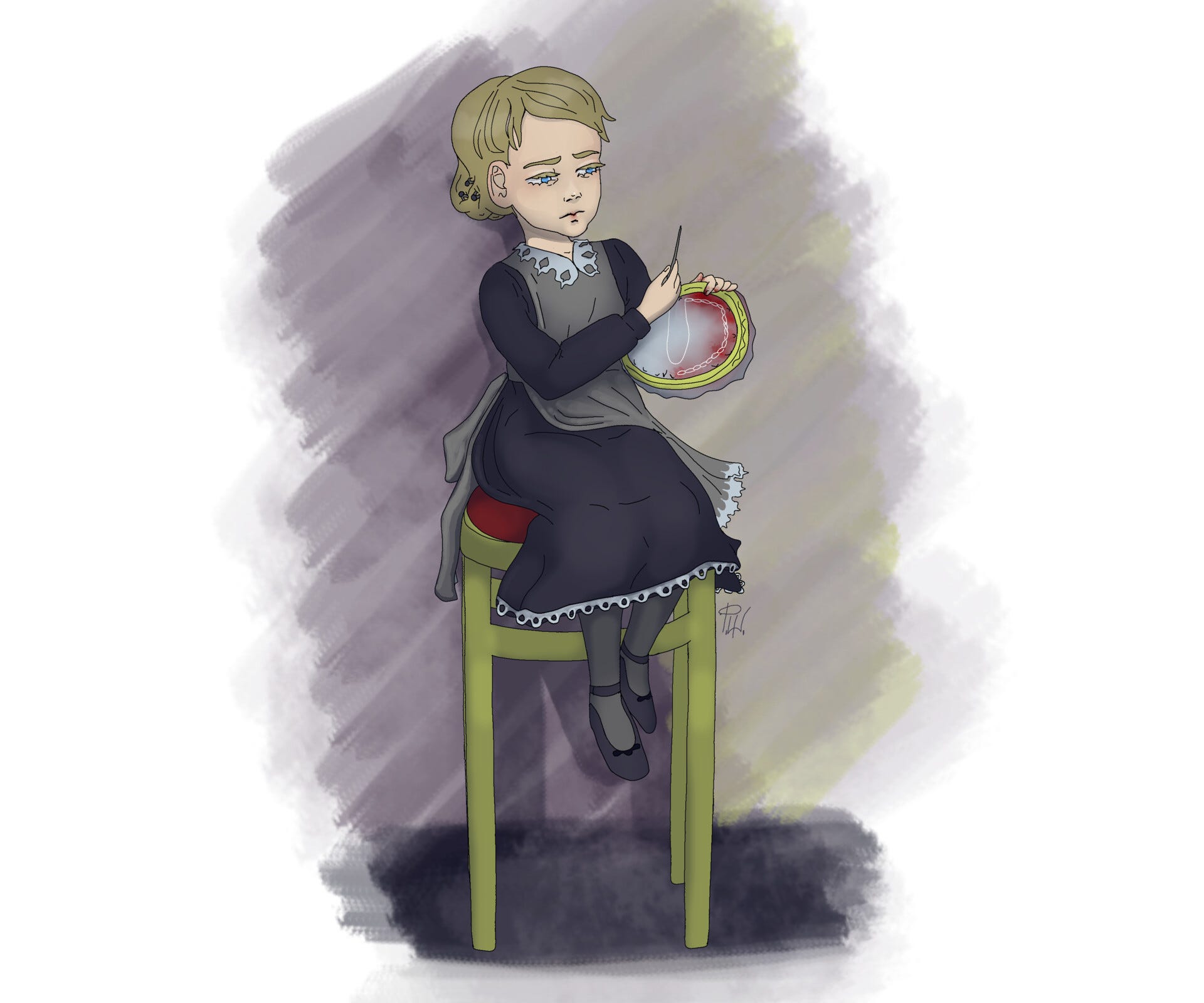
Our narrator and Polly are not fast friends. We finally learn in Chapter Two that our narrator is Lucy Snowe. Lucy finds Polly’s presence a nuisance, declaring, “whenever opening a room door I found [Polly] seated in a corner alone...” Polly’s first few days at the Brettons are spent moping around the house, wishing she were back home with her father.
Polly is sulking by the window one afternoon, watching the people pass by in the street, when she spots a familiar face in the crowd, her father. Mr. Home does a lot of too-ing and fro-ing. He has come to stay for a few days before heading off to the continent. Lucy watches (she’s always watching) their emotional reunion and seems uncomfortable and judgmental of their affection for one another.
But Mr. Home is not the only new arrival at the Brettons’. Mrs. Bretton’s son, Graham, has also arrived. He’s 16 and home from school. He’s charming and playful, especially with Polly. She tries to resist his charms because she’s too homesick, but she soon realizes she enjoys Graham’s attention.
Mr. Home stays with the Brettons for two nights before leaving for his travels. No sooner does the door close behind him than Polly bursts into tears, while Lucy watches and remains unmoved. “During an ensuing space of some minutes, I perceived she endured agony...” Lucy watches with her usual emotional distance, but she occasionally allows her emotions to show. When they are alone in their bedroom, and Polly is so distraught she cannot sleep, Lucy drops her emotional aloofness and comforts the young girl. She’s cool but not unfeeling.
With her father gone, Polly soon finds comfort in doting on Graham as a replacement for her much-loved father.
“The league of acquaintanceship thus struck up was not hastily dissolved; on the contrary, it appeared that time and circumstances served rather to cement than loosen it. Ill-assimilated as the two were in age, sex, pursuits, &c., they somehow found a great deal to say to each other.”
“...now that her father was taken from her she nestlred to Graham, and seemd to feel by his feelings: to existin his existence.”
Polly needs to live for another (especially men), something Lucy is determined not to do.
Two months pass, and Polly and Graham grow closer despite the difference in their ages. But their friendship will end abruptly when Mr. Home writes to inform Mrs. Bretton that, now that he’s settled with his kinfolk abroad, he wants Polly to join him.
Lucy seems quite pleased to break this news to the strange, tiny creature who’s been sharing her room. In a “trenchant manner,” Polly agrees that she would like to join her father, but she can’t break the news to Graham. It’s too emotionally difficult, and she asks Lucy to break the news to Grahamb. He is disappointed to hear of Polly’s imminent departure, but not as upset as Polly. She lies at his feet like a loyal dog, but Graham seems barely to notice her. Lucy does her best to soothe the young Polly as she mourns the loss of Graham and tries to process the fact that he only “loves” her as a “favorite child.” Meanwhile, Lucy worries about how Polly will cope once she’s out in the real world.
“How will she get through this world, or battle with this life? How will she bear the shocks and repulses, the humiliations and desolations, which books, and my own reason, tell me are prepared for all flesh?”
Young Polly isn’t as prepared for the harsh realities of life in the real world as Lucy believes herself to be. If you’re always dependent on others, how will you survive when you have no one but yourself to rely on?
Lucy leaves the Brettons shortly after Polly heads off to the Continent. In six months, Lucy will have to face her own “battle with this life” as her world is turned upside down, leaving her orphaned and without a friend to lean on. She must survive on her wits alone. As Lucy says, “...to myself alone could I look...”
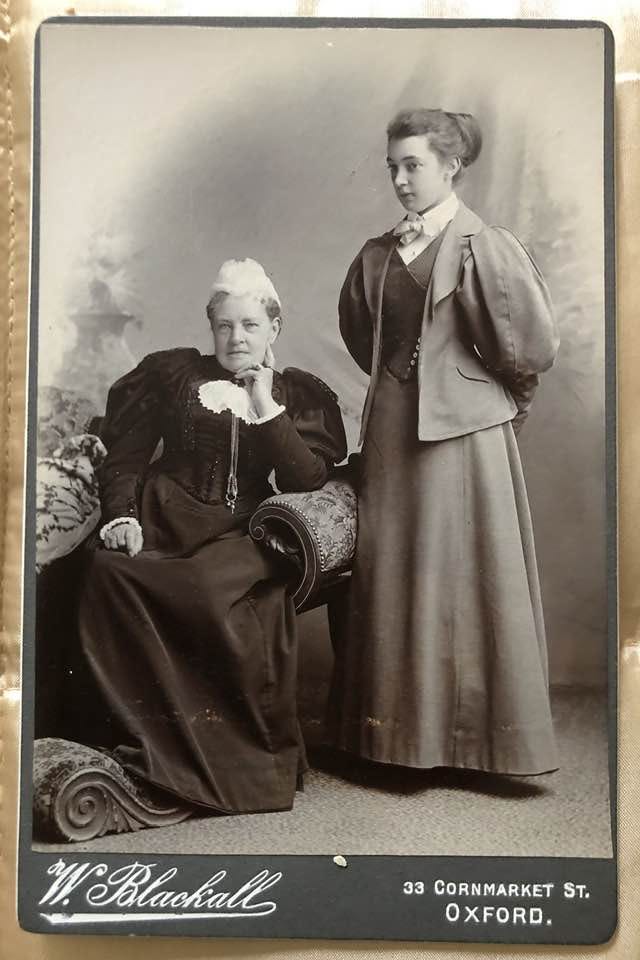
She finds work as a companion to a rich, rheumatic woman of fortune named Miss Marchmont. She grows close to her employer as they spend more and more time together. “Two hot close rooms thus...” Miss Marchmont shares her tragic history and how she lost her true love and fiancé, Frank. She even decides to leave Lucy some money in her will, but she dies before she can make the necessary changes.
“My little morsel of human affection, which I prized as if it were a solid pearl, must melt in my fingers and slip thence like a dissolving hailstone. My small adopted duty must be snatched from my easily contented conscience. I had wanted to compromise with Fate: to escape occasional great agonies by submitting to a whole life of privation and small pains. Fate would not so be pacified; nor would Providence sanction this shrinking sloth and cowardly indolence.”
Lucy is once again adrift without friends, family, or a source of income. In a moment of spontaneity, Lucy decides to “leave this wilderness” and head to London. At first, she is overcome with the rush of travel and being somewhere new. But reality sets in, and she starts to worry about how she will survive.
“All at once my position rose on me like a ghost. Anomalous, desolate, almost blank of hope it stood. What was I doing here alone in great London? What should I do on the morrow? What prospects had I in life? What friends had I on earth? Whence did I come? Whither should I go? What should I do?”
Despite her fears for her future, Lucy finds joy in London. Here, she is free to wonder and enjoy the “ecstasy of freedom,” something she’s never felt before.
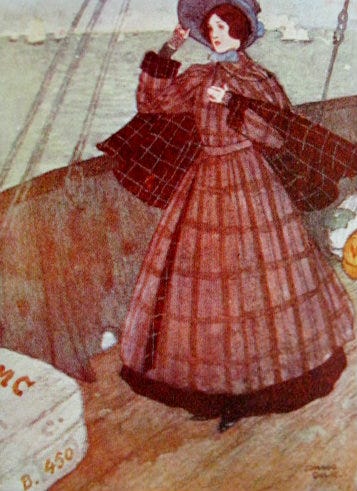
Lucy takes another leap of faith and books herself a berth on The Vivid bound for Port Boue-Marine on the continent. On the ship, she makes the acquaintance of a young lady, Ginevre Fanshawe, who is bound for Madame Beck’s girls’ school in Villette (Brussels), the capital of Labassecur (Belgium). Ginevre is seventeen and terribly shallow. She’s shocked that Lucy is traveling to Boue-Marine in order to find a way to “earn a living” (how disgusting!).
Lucy arrives in Boue-Marine with nowhere to go and no way to communicate, as she doesn’t speak French. She finds a respectful inn for the night, but when morning comes, she must find a way to survive in this new country before her meager savings run out. Lucy soon remembers the name of the school Ginevra was heading to and decides to go to Villette to try to find employment there.
When Lucy arrives in the capital, she cannot find her trunk and cannot understand what the coachman is telling her. She overhears a man speaking English and asks him to help her find out what happened to her belongings. He comes to her aid, and they plan to have her belongings sent to her as they were left behind. This helpful Englishman directs Lucy to an inn before they part ways (don’t worry, we will see him again soon).
Lucy attempts to find the inn but gets lost. Fate is on her side, and she ends up at Madame Beck’s Girl School. She seizes the opportunity and requests a meeting with the proprietress, Madame Beck. She is a formidable woman who enters the room silently. Lucy asks whether there is any work for her at the school. Madame Beck interrogates Lucy before calling in one of the teachers, M. Paul, to examine her character using his knowledge of physiognomy. He assesses her and, after some hesitation, gives his approval.
“Engage her. If good predominates in that nature, the action will bring its own reward; if evil—eh bien! ma cousine, ce sera toujours une bonne œuvre.”
Lucy is relieved.
And so begins Lucy’s adventures at Madame Beck’s. At first, she works as a sort of nanny to Madame Beck’s children and also assists Madame Beck, almost like a lady’s maid. But Lucy is soon thrown into teaching English to a class of sixty young women. She has been practicing her French and steeling herself to face a class full of girls who might eat her alive. But she manages these girls with ease and quickly shows them that she’s not to be messed with. Lucy refuses to be intimidated, and Madame Beck promotes her to a full-time English teacher.
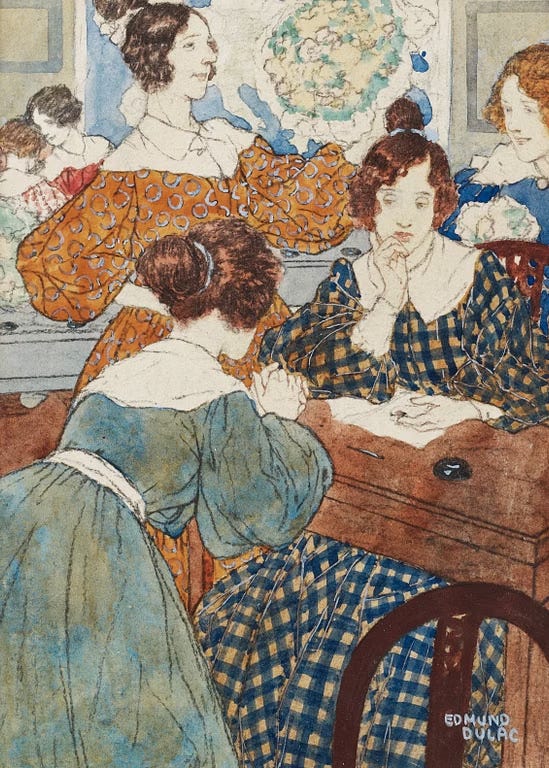
Lucy describes Madame Beck as one who glides ghostlike through the school and uses her army of “spies” to keep tabs on everything happening under her roof. She’s not above snooping through people’s drawers if she has to. But Lucy is also watching and observing everything happening at the school. There is quite a lot to observe. She follows Ginevra's romantic exploits (and is disappointed in her behavior). She observes some strange occurrences in the garden, including clandestine messages between lovers. There is much drama bubbling under the surface at Madame Beck’s. And I haven’t even mentioned the ghost nun that haunts the school! She’ll be more important later in the story.
When one of Madame Beck’s children falls ill, the new doctor in town answers the call. The new doctor is a young, attractive Englishman, the very same man who helped Lucy when she first arrived in Villette. The new doctor makes such a good impression on Madame Beck that she makes him the family’s regular physician. This may be more due to Dr. John’s good looks than to his skill as a medical man. He seems to have caught the eye of the widowed Madame Beck. But she’s not the only one interested in the doctor. It seems he’s smitten with young Ginevra, but she’s more interested in stringing him along. Lucy strongly disapproves of Ginevra’s behavior.
Soon, summer arrives in Villette, and the term is nearing its end. The school is preparing not only for exams but also for the Fête de Madame. The halls are filled with merriment and joy as the students prepare for all the festivities, including not just a ball but also a play organized by M. Paul. On the day of the fete, M. Paul needs a last-minute actor and convinces Lucy to take the part. He locks her in the attic so she can learn her lines. She’s there for hours before he releases her to join the other players. Lucy is playing a male role but refuses to wear pants. Instead, she dresses as she likes and takes the stage, where she lets go of her usual emotional restraint and gives herself over to the role.
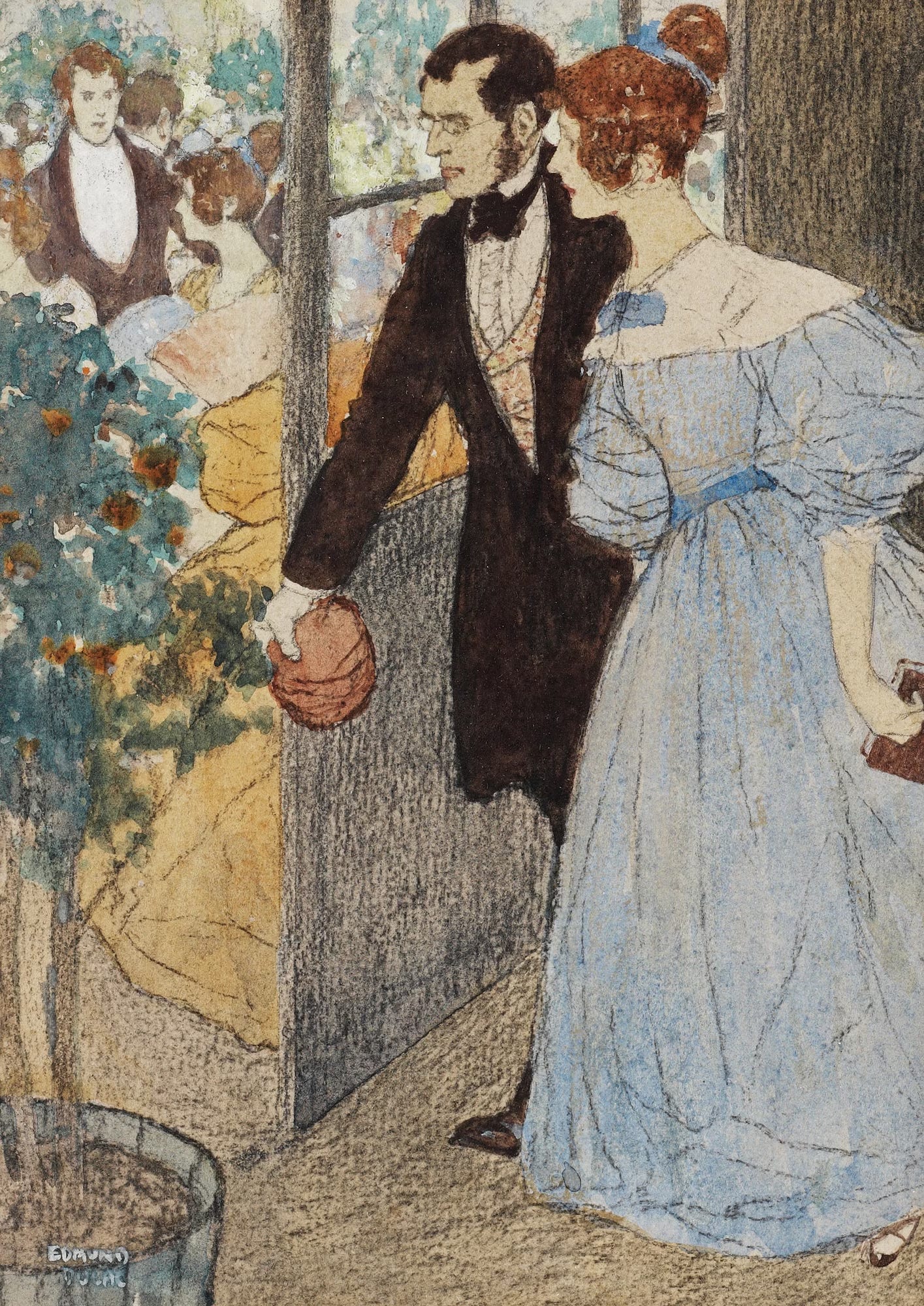
At the ball later that evening, Lucy watches Ginevra with Dr. John and is disappointed by how she treats him. Ginevra is shamelessly stringing along two men. The reliable and kind Dr. John and the more enticing Colonel de Hemal, “a gentleman of excellent connections, perfect manners, sweet appearance, with a pale interesting face and hair and eyes like an Italian.” Lucy ends up spending most of the night talking to Dr. John while he watches Ginevra flirt and dance.
Soon, the end of term arrives, and the girls head home. Madame Beck and the professors leave for vacation. Having nowhere else to go, Lucy remains at the school with one servant, “and a poor deformed and imbecile pupil.” But before love even arrives, they leave Madame Beck’s, and Lucy is alone for the first time in months.
Her mind is troubled; she isn’t sleeping well, and she’s growing quite ill, taking to her bed. But one night, overcome with the need to confess, she dresses and goes to the local Catholic church to speak with the priest. The priest is surprised that a Protestant would seek him out for confession, but he doesn’t turn her away. He asks for time to think over what she’s told him and tells her to return to the church the next day.
“We all think ourselves strong in some points; we all know ourselves weak in many; the probabilities are that had I visited [the catholic church], at the hour and day appointed, I might just now, instead of writing this heretic narrative, be counting my beads in the cell of a certain Carmelite convent on the Boulevard of Crécy, in Villette. There was something of Fénélon about that benign old priest; and whatever most of his brethren may be, and whatever I may think of his Church and creed (and I like neither), of himself I must ever retain a grateful recollection. He was kind when I needed kindness; he did me good. May Heaven bless him!”
Despite the priest’s kindness, Lucy has no intention of turning “back to the true church.” As she makes her way back to Madame Becks, her fever returns, and she collapses in the street.
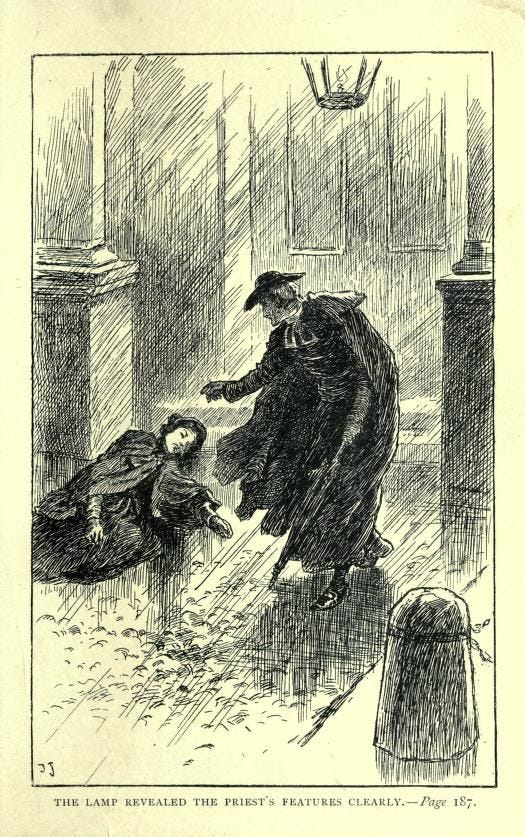
Here is where we leave Lucy Snowe, for now.
Discussion:
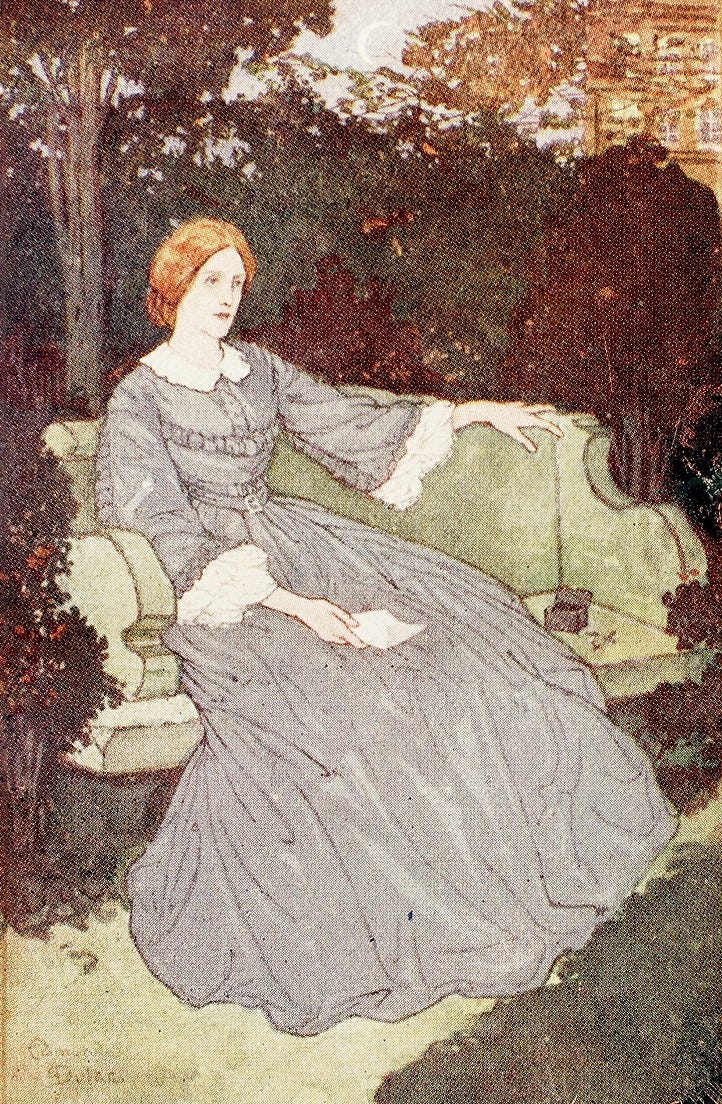
Lucy as Outsider:
“In Villette, Lucy’s muteness is not the sign of her speechless terror, but rather a crafty tool to keep both Mme Beck and the readers out.” (Jagannathan, 2022)
One of Madame Beck’s defining traits is her tendency toward “espionage.” She has keys to every room and moves silently through the school, watching and even snooping through people’s belongings. But she’s not the only observer in the novel. Lucy also prefers to hang back and watch the people around her. So much so that we don’t even learn she’s our narrator and protagonist until Chapter Two!
Lucy doesn’t seem to fit in. “Lucy is everywhere, not at home” (O’Dea, 1988). She might be Mrs. Bretton’s goddaughter, but she’s not a true member of the family. She finds some comfort in being a companion to Miss Marchmont, but this is, unfortunately, short-lived, and Lucy ends up trying to find where in the world she belongs and how to support herself. Gilbert and Guber (1979) describe her as having to “seek her identity on foreign soil because she is metaphorically a foreigner even in England. Homeless, she is a woman without a country or a community…” She’s a woman without friends or family, a stranger in a strange land, trying to survive on her own. Observation becomes a survival tool.
Lucy seems particularly interested in the romantic goings-on around her. From Polly’s obvious crush on the much older Graham Bretton to Ginevra’s love triangle, Lucy is captivated by relationships. She seems annoyed by Polly’s childish crush and disdainful of Ginevra’s treatment of Dr. John. “Lucy scorns flirtation dissociated from true love, from spiritually oriented relationships between persons” (Blackall, 1976). She is reserved and seemingly without desire. One of the few times she lets go of her controlled persona is when she is on stage. “In the play, Lucy can do what she cannot easily bring herself to do in real life, become an active agent in seeking what she desires” (Blackall, 1976).
To cope with life’s uncertainties, Lucy has developed a very controlled, taciturn demeanor. All the while, she watches and judges those around her as she sees fit. For the most part, this aspect of her character is known only to the reader. She even tells us as much:
“I had feelings: passive as I lived, little as I spoke, cold as I looked, when I thought of past days, I could feel. About the present, it was better to be stoical; about the future—such a future as mine—to be dead. And in catalepsy and a dead trance, I studiously held the quick of my nature…”
She uses her "frigid” demeanor as a protective shield. We see one side of Lucy Snowe, while the other characters only see her carefully curated self. I wonder whether this is what M. Paul was picking up on when he analyzed her through physiognomy. When Madame Beck asks him whether Lucy is “bad or good,” he replies, “of each kind without a doubt.” He seems to be the first to notice this duality in her character.
Lucy vs. Jane:
“...Jane’s potential as a character is apparent throughout the novel, while Lucy tends to watch herself ‘unfold’” (O’Dea, 1988)
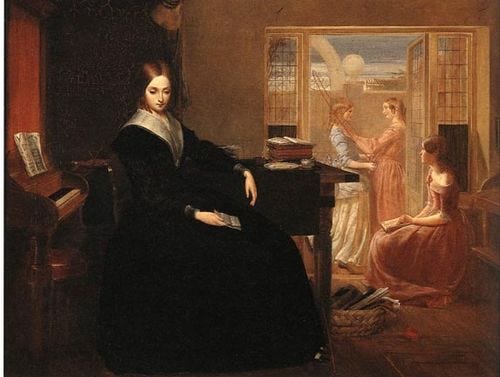
Comparing Jane Eyre and Lucy Snowe is unavoidable. There will be many opportunities to compare them throughout our reading of Villette, but I’d like to take a look at how they compare now, and then maybe we can circle back to this at the end.
When we first meet Jane Eyre, she’s a young orphan in an abusive and neglectful household, but her personality and sense of self are already formed. The ten-year-old Jane we meet at Gateshead is the same confident and determined woman who refuses St. John Rivers and walks into Ferndale to claim her love, Mr. Rochester. She has an innate sense of right and wrong. She’s determined not to suffer injustice, and she will make her way in the world on her terms, guided by her own moral compass.
While Jane’s character is largely fully formed at the start of the novel, Lucy is still finding herself. When we meet her, she’s on the sidelines, watching other lives and emotional connections instead of being an active participant in the world around her. She hides her true feelings about losing her parents, but it’s obvious that this loss has had a great effect on her life, both financially and emotionally. We have little sense of who the true Lucy is, and it will take time for that self to be revealed.
Lucy is more judgmental and detached than Jane. She makes friends and forms strong bonds with many people throughout the novel. For much of Villette, Lucy is removed from others. Is she afraid to make emotional connections? Does her emotional distance stem from the loss of her parents? Is she trying to avoid further heartbreak? Or is Lucy simply someone who hasn’t discovered who she really is because her focus is on simply surviving as a single woman on her own?
Gilbert and Gubar describe Lucy as “silent, invisible, at best an inoffensive shadow,” unlike the more bold and outspoken (at times) Jane. But there are some key similarities between Jane and Lucy. Gilbert and Gubar (1979) also stress that Lucy’s “repression is a response to a society cruelly indifferent to women.” Both Jane and Lucy are left with no patrimony and must find a way to survive. They both represent the women who struggled to find an independent identity and to break free of the traditional roles and expectations imposed on young Victorian women (Gilbert and Gubar, 1979).
Perhaps the most important difference between Jane and Lucy is that we trust Jane to give a truthful account of her life. I can’t see the same of Lucy. “In Lucy Snowe, Brontë has designed a voice that challenges the very essence of the reader/narrator relationship.” (O’Dea, 1988). Is she an unreliable narrator? Why might Brontë want her to keep the reader, as O’Dea (1988) says, “on edge”?
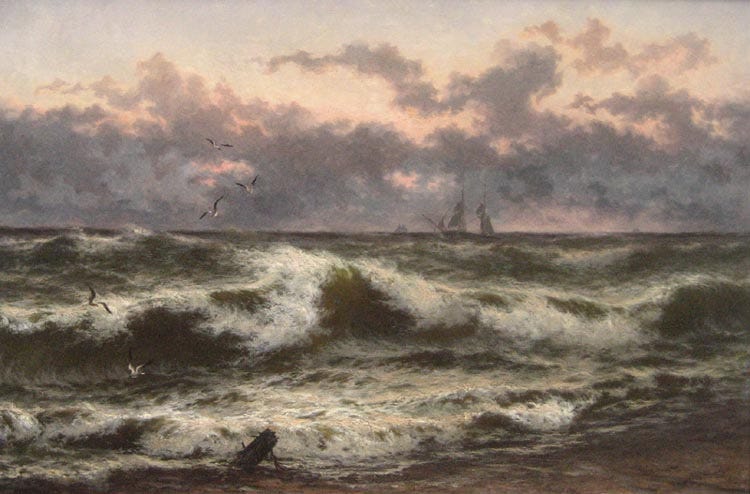
Stormy weather, just can’t get my poor self together:
“The world can understand well enough the process of perishing for want of food: perhaps few persons can enter into or follow out that of going mad from solitary confinement.”
While Villette may feel more like a Victorian Realist novel than the Gothic Jane Eyre, it still contains a few of these elements. You may have noticed references to stormy or inclement weather throughout Volume One. From the stormy seas that make Lucy an orphan to the storm that precedes Polly’s arrival at the Brettons, violent weather is a harbinger of crucial, life-changing moments for Lucy.
But it’s not just stormy weather. Lucy also suffers from internal “storms,” such as when she’s left alone at Madame Beck’s, where she slips into a depression and grows ill and feverish. The reality of how alone in the world she is torments her. By the end of Volume One, she’s delirious, wandering the wind-blown streets of Brussels, before she collapses. Try as she might to repress her emotions, they will find a way to bubble to the surface.
Storms will play a major role in the novel’s final scenes, so keep note of the storm moments, both external and internal, as you read.
Biographical Note:
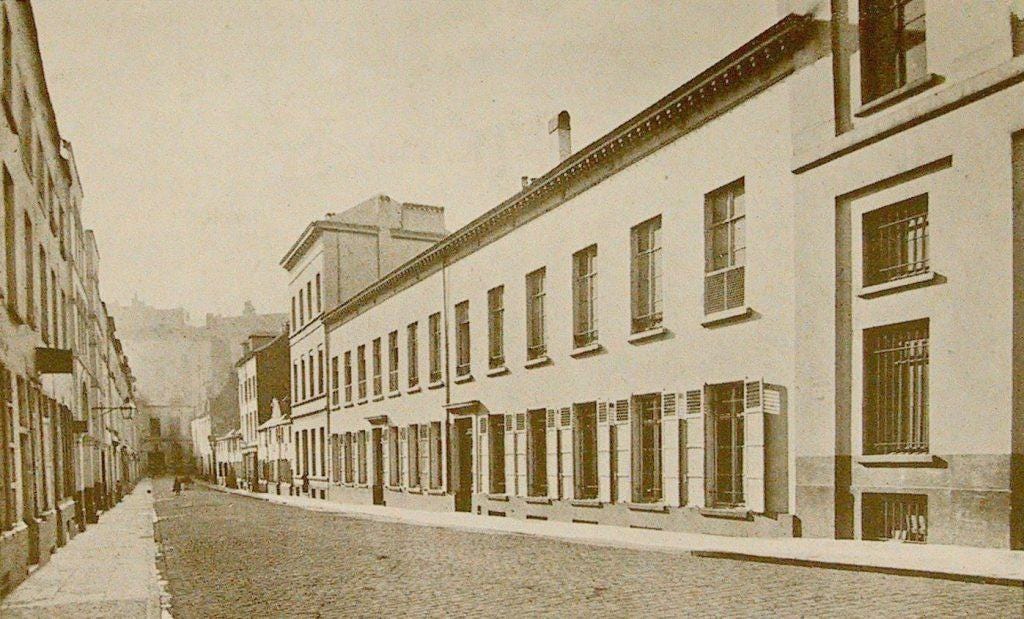
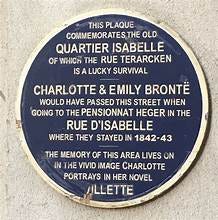
In 1841, Anne is miserable as a governess, and Charlotte is determined to find a way for the sisters to earn money without being governesses forever. That summer, Charlotte hatches a plan, and the sisters will open their own school. She even convinces her Aunt Branwell to provide the capital needed to start the school. Charlotte throws herself into planning and, with the help of her old friend Miss Wooler, finds a school (Dewsbury Moor) she could take over. Taking over an already established school with a good reputation in the area would help jump-start this endeavor. However, Charlotte’s enthusiasm for this scheme soon wanes.
While Charlotte was working on the school idea, the Taylors, friends of the Brontës, were planning a trip to Belgium. Charlotte, who always had “a taste for the exotic,” decided to change tack (Barker 1994). Charlotte seemed in the mood for an adventure, so she put these plans on hold. The new plan was for her and Emily to travel to Brussels to attend school and study French and German, something that would set their school apart from others in the region. She wrote in a letter to her Aunt: “They say schools in England are so numerous, competition so great, that without some such step towards attaining superiority we shall probably have a very hard struggle and may fail in the end” (Barker, 1994). Plans changed, and the search for a good, affordable school began.
In February 1842, Charlotte, Emily, Patrick, and the Taylors all traveled to London to take the packet to Belgium. Poor Lucy Snowe was forced to make this journey alone, while Charlotte and Emily were surrounded by friends and family. Their father even made a book of handy French phrases to help them when they arrived (Barker, 1994). However, like Lucy, Charlotte was thrilled to be in London and wanted to take in as much of the city as she could before heading off to the continent.
Once they arrived in Belgium, the whole party boarded a stagecoach that would take them on the long journey to their final destination: The Pensionnat Heger in the heart of Brussels. Meanwhile, the Taylors and their cousins, the Dixons, headed off to their nearby residences.
The Pensionnat Heger was a boarding school run by Constantin Heger and his wife, Claire. The school was expensive, but Charlotte worked out a deal with Madame Heger before their arrival so the girls could “benefit from a continental education at a reasonable cost.” The girls were both students and teachers, with Charlotte teaching English and Emily teaching music in return for board and lodging.
I just want to note that Charlotte sold this scheme to Emily as a six-month trip, but she actually planned for them to be away for a whole year. “One can only wonder what Emily’s response was to this idea. For someone who had not survived more than six months away from home without becoming physically ill, the prospect of a year among strangers in a foreign land must have been truly intimidating” (Barker, 1994). Emily suffered from extreme homesickness whenever she had to be away from Haworth for “too long”, so it will come as no surprise that Charlotte found this trip more beneficial than Emily. True to character, Emily was rather miserable at Pensionnat Heger and returned after one year. Charlotte, meanwhile, stayed on for longer.
Sadly, the Brontë Sisters School never came to be. Women’s education at this time often focused on accomplishments such as proficiency in foreign languages, sewing, drawing, and piano playing, in addition to the basics (reading, writing, and arithmetic). The object of female education was to mold young ladies into “good spouses” rather than to fill their heads with silly things like science or the classics! (more on women’s education in Victorian England here) Given the liberal and varied education the Brontë sisters received from their father after the disaster that was the Clergy’s Daughter’s School, I’m keen to know what curriculum Charlotte, Emily, and Anne might have crafted for their students. Would they have stuck to traditional teaching plans, or would they have created a truly revolutionary school for young women? Unfortunately, we will never know, but it is fun to speculate.
We will talk more about The Pensionnat and Heger’s when we discuss volume two. Things are going to get kind of juicy!
Wrapping up:
In my introduction post, I mentioned that a podcaster described Villette as “watching a woman descend into madness.” I wasn’t sure I agreed with that take, but on rereading, I’m starting to see how deeply psychological Villette is. I’m still not sure whether this will become a favorite Brontë novel, but as I said at the start, it’s growing on me.
I continue to wonder why this has never been adapted for film, but I found this audio play of Villette, which looks really interesting:
Now that we’re done with the house renovations, I can focus on catching up on my reading and drafting these discussion posts! Thank you for sticking with me while everything was in disarray here. I appreciate you all!
As always, thank you for reading and supporting my little Substack.
Happy Reading!

Sources:
Barker, J. (1994). The Brontës. St. Martin’s Press.
Blackall, Jean Frantz. “Point of View in ‘Villette.’” The Journal of Narrative Technique 6, no. 1 (1976): 14–28. http://www.jstor.org/stable/30225572.
Brontë, C. (2003). Villette. Dover Publications. (Dover Thrift Editions).
Gilbert, S. M., & Gubar, S. (1979). The madwoman in the attic: The woman writer and the nineteenth-century literary imagination. Yale University Press.
Jagannathan, M. (2022). Aesthetics of Wounding: Strategies of Self Repression in Charlotte Brontë’s Villette. Journal of Narrative Theory, 52(2), 213–239. https://www.jstor.org/stable/27392069
O’Dea, G. S. (1988). Narrator and Reader in Charlotte Brontë’s Villette. South Atlantic Review, 53(1), 41–57. https://doi.org/10.2307/3200400